Authentication Code Illustration: Isometric Design for Modern Brands
In the crowded digital space, capturing attention requires more than just good copy; it demands visual storytelling that resonates instantly. The Authentication Code Illustration set is a prime example of how specific visual assets can bridge the gap between complex technology and user-friendly design. This collection isn't just about pretty pictures; it is a strategic asset for anyone looking to visualize security, verification, and digital processes with clarity and style. Designed in an isometric style, these illustrations offer a unique perspective that is both engaging and informative, making them ideal for a wide array of professional applications.
Understanding the Isometric Style and Its Appeal
The core of this product lies in its isometric design approach. Isometric illustration is a method of drawing 3D objects in 2D space. Unlike perspective drawing, where lines converge at a vanishing point, isometric art maintains parallel lines, creating a clean, geometric, and slightly abstract look. This style is particularly effective for depicting technical or abstract concepts—like an authentication code or a secure login process—because it simplifies complexity without sacrificing detail.
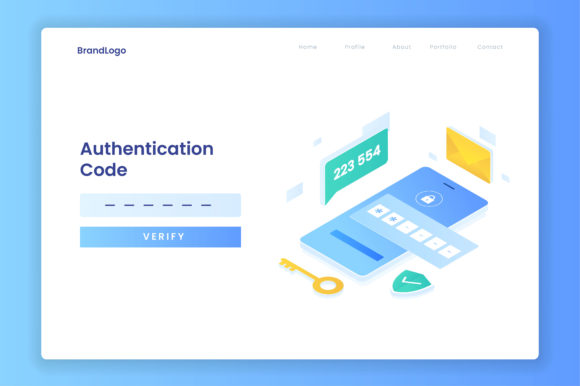
The Authentication Code Illustration leverages this style to create images that feel modern, professional, and universally understandable. You will typically find clean lines, bold yet harmonious color palettes, and a focus on symbolic elements such as locks, shields, keypads, and user avatars. The "personality" of these illustrations is trustworthy and tech-savvy, but not cold. They manage to humanize digital security, making concepts like two-factor authentication (2FA) or secure data entry feel accessible rather than intimidating. This balance is crucial for brands that want to project competence while remaining approachable.
Strategic Applications: From Landing Pages to Mobile Apps
The versatility of the Authentication Code Illustration package is one of its strongest selling points. For web design, these assets are invaluable. They can serve as hero images on landing pages for SaaS products, fintech startups, or cybersecurity services. Instead of relying on generic stock photos of people pointing at screens, an isometric illustration provides a distinct visual hook that reinforces the product's core function—security and verification. On a website, such an illustration can guide the user's eye toward a call-to-action (CTA), effectively becoming a part of the site's visual hierarchy.
Beyond the web, the utility extends to mobile applications. Onboarding screens within an app are perfect for this style. When explaining a multi-step authentication process to a new user, a series of clear, isometric graphics can reduce cognitive load and improve the user experience. The illustrations can break down the steps visually, ensuring users understand the importance of security features without needing to read lengthy text instructions.
For marketers and content creators, the included file formats—AI, EPS, JPEG, PNG, and SVG—ensure maximum flexibility. The vector files (AI, EPS, SVG) allow for infinite scaling and easy color customization to match specific brand identity guidelines. This means a small business owner can tweak the primary color of the illustration to match their logo, ensuring consistency across all marketing materials. Whether it is for a social media campaign, a presentation deck, or a printed brochure, the high-resolution JPEG and PNG files are ready to use. This adaptability makes it a premium design asset rather than a one-off image.
Enhancing Brand Perception and User Engagement
Visual consistency is a cornerstone of professional branding. By integrating the Authentication Code Illustration style across multiple touchpoints, a business can build a cohesive visual language. For instance, a tech startup might use these isometric characters on their website, in their app's help section, and on their conference banners. This repetition reinforces brand recognition and signals attention to detail—qualities that users subconsciously associate with reliability and trust.
Furthermore, the right illustration can significantly influence audience engagement. Abstract concepts like "data encryption" or "secure protocols" can be difficult for a layperson to grasp. However, a well-designed isometric illustration translates these ideas into tangible visual metaphors. When a user sees a friendly, stylized graphic of a secure login process, they are more likely to feel confident in the platform. This emotional response is a powerful driver of conversion and retention.
Practical Guidance for Implementation
When incorporating the Authentication Code Illustration into your projects, consider the surrounding design elements. Because the isometric style is inherently detailed and structured, it pairs well with clean, minimalist layouts. Allow for ample white space around the illustration to let it breathe and to prevent the page from feeling cluttered. In terms of typography, pair these illustrations with a modern sans serif font for body text to maintain readability, or a bold display font for headlines to complement the illustration's geometric nature.
It is also worth testing different compositions. The beauty of having access to vector formats like SVG and AI is the ability to deconstruct the illustration. You might isolate a single element—like a shield icon or a user avatar—to use as a standalone icon in your UI design, or combine multiple elements to create a larger scene for a poster or banner. This modular approach maximizes the value of the asset.
Finally, always ensure that the illustration's color scheme aligns with your project's emotional tone. While the default colors are often chosen for broad appeal, customizing them can make the asset feel bespoke. A fintech app might prefer blues and greens to evoke trust and growth, while a creative agency might opt for a more vibrant, high-contrast palette. The Authentication Code Illustration is not just a static image; it is a flexible tool designed to enhance your visual communication strategy, making complex digital processes feel simple and secure.